

I’d like to start by saying that I thoroughly enjoyed this class. As a first year student, it was the perfect class to start a new chapter in my life with. The fact is was a FIG was even better. Having multiple classes with the same people really creates a camaraderie that is hard to get with any other class. From the first class to the last, I can say with confidence that I learned more about people than with any other class I had this semester. Every Monday class was a ton of fun, though it sometimes included some frustrations as well. Most of the time, I was never the one to do the frustrating tasks, as I often did the smaller tasks when in a group. That is usually my role, and I feel like I fill it nicely. Some of my favorite meals were when we made the pesto, the catfish, and the balkan food. The variety we had this semester was incredible. I never knew what to expect when I walked in. The pesto was nice because it was so easy, the catfish was awesome because I had never deep fried anything in my life, and the balkan food was great because I have had similar authentic food when I was in Germany. I learned a lot, yet not as much as I wish I did. I should have been more proactive when I was cooking. I didn’t have any Wednesdays stand out in my mind, they all kind of blended together. The articles we read oftentimes didn’t interest me, as I hardly recommended my articles to other people. There were a couple that I enjoyed, and the one that stands out the most is “Not just a White Girls Thing” which talked about body dysmorphia for more than just white, teenage girls. Most of the meals we had on Wednesday were provided my slow food, and I wouldn’t say they are as good as what we made on Mondays, but it wasn’t bad. As for the guest speakers on Wednesdays, there weren’t any that are too memorable to me. The one that was memorable was the farmer that came in, Kay Jensen. To have someone come in who has been through it all and to be able to show what a farmer goes through on a normal day, is powerful. To see how much thought and time someone needs to put into their future is eye-opening. To make profit in the farm industry is incredibly hard, and I even knew that coming in. I didn’t realize how hard it all was. She really engaged all of us well and the topic was very interesting to me, so I naturally enjoyed that presentation. All things said, no class is perfect, and there were some things I didn’t personally like, but I sure am glad I took the class. I wouldn’t have taken any other humanities, and I regret nothing.
Summary of a Class
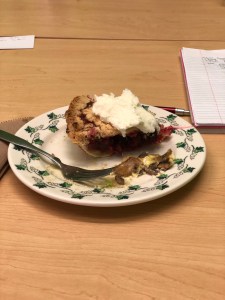
On November 12th, We had Theron Schmidt volunteer his time and he taught us how to bake homemade pies and vegan quiche with a Caesar salad to pair with it. My group was tasked with making the tops for the pies, while other groups were tasked with other specifics like the Caesar salad or creating the crust of the pie and adding filling. It seemed more like an assembly line, which is very different from what we usually do, where we all make a dish for the entire class and share that. It was a nice switch up to make things feel different. As far as what other groups did, I can’t speak for them, but my group actually had a little bit of trouble making the tops for the pies. We used one part vegan butter to two parts flour. I also accidentally spilled some of the flour, but it ended up helping me in the long run I think. The trouble for our group was that when we tried putting the mixture into a ball for it to be rolled out, Katelyn and Lars had a bit more
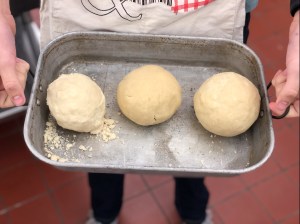 trouble getting it to stick, but because I spilt some of the flour, I think it helped to get the mixture to stick together. We then froze the mixture to get it to stick together, but this made it just that much harder to roll out. We eventually got it to relatively work, but Katelyn had to make her pie a crumble top. We then all waited for the pies to bake and we set the table and Theron started a discussion about democracy and other ways of leadership. We made a pros and cons list of each form of democracy. Before we got too deep in discussion, the pies were ready and we got up and got food. We the ate, listened, and discussed the current situation of democracy that America is in, as well as other countries. We talked about how, right now, we elect people who voice their opinions for us for the sake of speed, instead of where we have a national election over every decision that is made, which is a much slower process . As Theron came from living in Australia and England, he has experienced a wide variety of forms of government, and he provided a great thought exercise, especially since Midterm elections were very recent. It was a very different experience on this Monday as opposed to others. We were are interacting quite a lot more during the second half of the class. We oftentimes just listen to the speaker and ask just a question or two and we go clean up, but we were much deeper in thought this class, which is always a benefit. I also noticed that we got out of class much later than normal, which may have been a side effect of how we did things this class period, so it may not have been as efficient, but it was very nice to switch it up from the usual formula that we follow in class.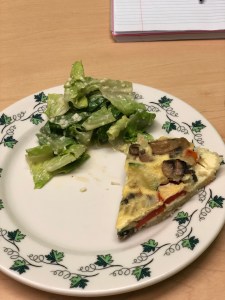
My Lagniappe Experience
Earlier the year, I volunteered at a food pantry. I put in ten hours, and it was an incredible experience. I learned a lot and gained new perspective on things. I worked at the River Food Pantry , which is located relatively close to the Dane County Airport. Each time I volunteered, I had to take an hour bus ride back and forth, which was very time consuming. Yet, I enjoyed it thoroughly. They have this great system set up to make things as easy as possible. I only had one job to do, which was to hand out certain foods. Each person paid a ce
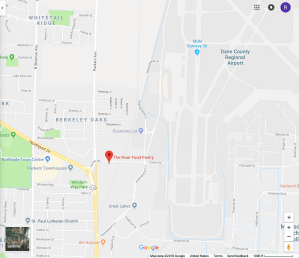 rtain dollar amount and gets to choose between a couple different items depending on the station. I was in charge of the items very few people actually wanted. I had to get rid of frozen vegetables, a frozen pizza, and a gravy. Most people wanted the pizza, so that was easy to get rid of. My eyes were opened by how many people had to deny the frozen things because they didn’t have freezers or things that I grew up with that I take for granted. I grew up in a middle class family, so we never had to go to food pantries, we never had to worry about buying certain foods and them going bad because we didn’t have a freezer. It was quite eye opening, and I definitely am more interested in helping out in the future. This non profit organization was very well set up, and everyone working there was very nice. They did employ people who either just got out of jail, of were working there instead of being in jail. so that was also eye opening. I had never really been around people that had been in that kind of trouble. I had been protected most of my life and I was always told how bad some of those people are, but after talking to a very small sample size, they were very nice and helpful. They worked their stations just like anyone else, and I’m sure they did a good enough job. It wasn’t anything hard. The hardest part of working at the food pantry was clean up and set up. There was a lot of moving everything around, there was a lot of mopping and that sort of stuff. Everyone had a job, and it went efficiently and smoothly. The River Food Pantry was a warehouse that was used to store a lot of food, but it also sold clothes and books and other things like that. They wanted to allow those who were down on luck to have every opportunity to get back on their feet. It was very powerful to work there, When I handed the food out, there were a lot of people that had I saw them on the street, I would not have guessed they needed help, and it definitely changed how I see a lot of people. IT just goes to show that you never know a person simply but knowing surface information.
Pitch of an Essay
This week, I read Slow Food and the Politics of “Virtuous Globalization”, and I must say, it was quite boring, and there’s no way I could recommend this to anyone who wants to read it for fun. There were some very interesting bits, but those were not very often, and oftentimes, when I read this article, I had to take an espresso shot just to stay awake. Alison Leitch very rarely uses personal anecdotes and chose to go with a mostly analytical analysis of Slow Food. Yet, I would like to talk about the things I liked about this article, but also the things I didn’t like. 
To start off, I will talk about the things I liked. This paragraph may be short, but I think any unbiased
review of anything should include the parts that are done well. To start, I do think that Alison does a very good job analyzing the history of slow food and why is started up. She brings up very specific points in history that legitimately

lead to the creation of Slow Food. This is imperative to any essay, because any author can make a fun, interesting piece, but unless it is based in truth, it cannot be viable in the assessment of its topic. She talks about the fact most people think that slow food is just a protest of fast food, but it is so much more than that. It was a continuation of the socialist idealism that was starting to spring up in Italy and many other European countries. Oftentimes I am critical of people who unnecessarily dive deeper into things just to feel like they are different, yet I think this deeper dive is worth diving into. Alison also talks about the rise of fast food due to uncertainty of food because of the wine situation
and Chernobyl, both causing distrust in government by the majority of people. People were panicking about their food, so people turned to capitalist chains like McDonalds because people knew they were safe. These were all so important to the rise of slow food, and it was interesting to learn.
Yet on the other hand, I was very bored with the article. The author fails to make this article interesting for me. As someone who loves history and whatnot, I couldn’t help but stop every couple paragraphs due to how boring it was. The word choice was bland, the sentences seemed to just go on forever, and there wasn’t any personality in the majority of the article. It really was hard to read. That isn’t to say its not worth reading, but I just couldn’t recommend this to anyone and feel good about myself. It
was only 12 pages, but it seemed to take me hours to read. As interesting as slow food can be, this article is the opposite. I came into reading this hoping that I would like it, but there was no way I could.
Family Memoir
In the Sanders extended family, food is one of the bonds that keep us close together. Oftentimes, food is just the excuse we use to get together no matter the occasion. For me personally, my favorite occasion is Packer games. Packer games in our family is like a religion. We all get our jerseys on, clean feverishly beforehand, cook food and relax for three hours on a Sunday. It doesn’t matter if we all were in a big family fight just an hour before the game, we all come together to support our team. For a game at noon, my family usually starts cooking at about 8-9 am. For over a year, my mom would make the same thing every gameday: a chicken, bacon, ranch and barbecue homemade pizza. It may sound good, but there are no words that could do this dish justice. It was the greatest single food I had ever eaten. For a long long time, I looked forward to every game just because of the pizza.
My mom always made it, but I always wanted to learn how. Basically, you need a special pan, apply some dough, but like, two cups of bbq sauce on top of the cut chicken along with homemade ranch and top it of with mounds of cheese. We used a very wide variety of cheeses, and I think that thats the reason I liked it so much. I could have eaten an entire pan myself every Sunday. Eventually everything came full circle because I started making it on special occasions. The first time I had ever made it, I made it for a girl I had asked to prom my senior year. I wasn’t sure if she would like it, but I knew that the pizza brought me so much joy and I wanted to

share that with her. Needless to say, she said yes and my guess was that it was the pizza that sealed the deal. Food can be a way to anyones heart, and it brought me so much joy to be able to share my enjoyment of the pizza with someone. Somehow, that pizza had made its way not just into my taste buds, but into my heart. Thats the power that food has on a Sanders. Food isn’t just sustenance, its a way to tell someone that you care. Its a way of providing comfort to someone. My family doesn’t talk all that much, but somehow every holiday, as long as there is food, my family meets up and we all have a great time. Food is memory. Whenever I think about my family and some of the hilarious moments we have had over the years, I can remember the smells and tastes of the day. From packer games to the real holidays, food is what drives the sanders family together.

HopCat Review
On Friday, my family and I went to HopCat on state street. I have walked past it a plethora of times, but this was my f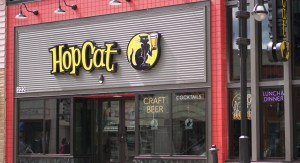 irst time eating there, and I was neither impressed or unimpressed. I have had much better food and much better ambiance, but I have also had the other end of the spectrum.
I ordered the stuffed cowboy burger for my first time. I was told it was their most popular menu item, or one of the most popular. It had good not great cheese, jalapeños that I think were deep fried, onion rings and bacon. All things considered, it wasn’t a bad burger by any means. I eat a lot of burgers, so it takes a lot to blow me away. I have my preferences when it comes to my burgers, and I prefer sweeter sauces with onion straws, or a Jack Daniels sauce. I am sure there are plenty of people who prefer this typer of burger, but I was no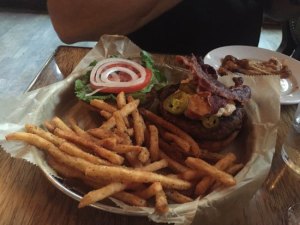 t now of them. The fries were very good, and the sauce that went with them were very good, so I would definitely recommend the fries to anyone. Being that HopCat is most known for being a brewery, or having an assortment of 130 ales and other beers, and I am under 21, I couldn’t try any of the beer legally. But that didn’t apply to my parents, so they tried a few brews, and they seemed to like many of them, so I guess I’ll take their word for it.
As far as the ambiance, I’ve been in so many places that have a much better identity. I have a vague idea of what that establishment looks like. It didn’t have a different identity, it didn’t have a vibe or feel to it. It wasn’t bad, just not memorable. But in Madison, where theres the third most restaurants per capita, I feel like restaurants need to stand out They need to pop, but this one doesn’t. To say it was underwhelming would be the most accurate statement you could make. If the restaurant wasn’t on state street, I’m not too sure it would get too much traffic. They had wood tables with some monitors and TVs showing some sports channels. I could go back to my hometown of 20,000 people and get the same experience. The thing that makes HopCat different is the beer. The abundance of beer makes a difference. Its what brings people in the doors, and what is used to wash down some mediocre food. Its clearly a successful business that I have no right to judge, but this is just my opinion.
The final verdict: its alright. Theres nothing special to this place. If I had a friend visiting and they asked me where they should eat, there would be a long list of restaurants I would say before HopCat. But, it is a typical Wisconsin experience, and thats worth a lot. When I think of midwestern dining, HopCat style is what I think of.
Review of Feeding Hard Bodies
For this week, I read a passage titled, Feeding Hard Bodies: Food and Masculinities in Men’s Fitness Magazines. I could not stress how much I did not like this passage. The author, Fabio Parasecoli is one of the most haughty authors I’ve ever read. He makes accusations that have nothing to do with fact and is entirely opinion-based. Yet, he passes up his work as if its fact.
The main points of the article are that, in a mens fitness magazine, its geared toward the building of the male body. He talks about how most of it is mumbo jumbo all to affect the psyche of the male looking to fit into the stereotype of an ectomorph, someone like a Chris Evans

or Tom Cruise. He talks about how a lot of the wording is to make us males feel guilty about how we look. He then talks about how men don’t eat things because of taste, but because its nutritional. For the first few pages, I understand what he is saying. He brings up valid points and as a white male who is very into fitness and
nutrition, I know what he is talking about firsthand. But when he starts talking about gender and basing things of one single article as well as a plethora of other points he brings up, thats when I lose all respect for Fabio.
He starts talking about the frail masculinty of men, and that men can’t cook because its to feminine. He mentions this on multiple occasions. Theres one part of the article that really bothered me, and thats when he is reviewing a singular article. The article has a Miss Olympia contestant, who happens to be black, cooking and sharing some of her recipes. That is put together with a white male dietitian and Fabio instantly assumes that the arti
cle is saying that because its a woman, she belongs in the kitchen, and because she is black, she can’t be the dietician. I find so much trouble with this because the article is clearly trying to get a well known name in there, and I’m sure this Miss Olympia happens to be a very good cook and has nothing to do with just being a woman. I know that many bodybuilders are excellent cooks because meal prep is so important to achieving the body you want. But that part was not all I had a problem with.
The second chapter I had a problem with is in the, “How to feed a naked woman” section. He talks about a part in the magazine that theres some good recipes that help with performance is bed due to nutrients that are in it. This is all meals for after a one night stand. He has a quote where is says, “Thank goodness science is there to help men achieve goals and, to some extent, to reassure their apparently wobbling self confidence.” This man assumes the if a man looks for information to help better themselves, then that man has no self confidence, and I just don’t get that. It was unnecessary and uncalled for. As someone who lifts quite frequently, Im always looking for ways to better my health or performance, and it has nothing to do with self confidence.
Overall, the first three pages were good, well thought out and informative. He then turned it into condescending, mean spirited opinions that are not based on fact, and for that reason, I would never read an
ything else by this author. I would not recommend this to anyone who thinks critically or enjoys aspects of fitness in any way.
Linking the FIG classes
When I first started taking these FIG classes, I had no idea why these three were linked up. The three seemed to different. Agroecology, Anthropology and the Food Culture class? It seemed to random. But after a month, I can completely see why they are linking. Anthro looks into the culture of humans while AgroEcology looks at how important agriculture and the structure of Agriculture is. There is a culture to food and a culture to agriculture. There is an importance of food in culture, and society has a say in how agriculture is performed. This all came into fruition last week, when we had a speaker who participated in Community Supported Agriculture and yet again when the author of The Culinary Triangle, an article I read, was introducing a famous anthropologist, Franz Boas.
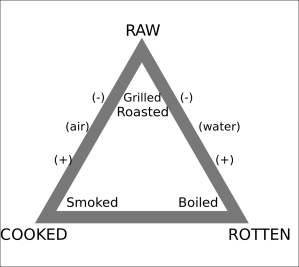
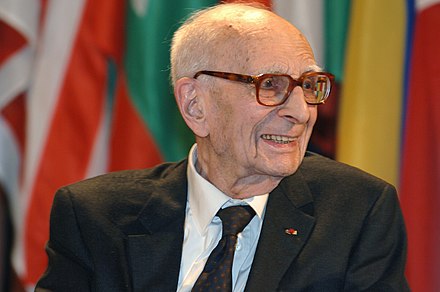
The Culinary Triangle is, in essence, a way of thinking that tries to explain the culture of how we cook food. Claude Levi Strauss, the author, was a famous French anthropologist, a
nd did major work in convincing people that the “savage” mind and the “civilized” mind are the same. The Europeans and the other are the same mind. He helped shape the way we think about people who are not the same. Strauss was widely regarded as one of the most influential anthropologists of his time. At the time reading The Culinary Triangle, I had a hard time picking out the motives behind the reading, and why this author would be trying to relate food to culture, but in hindsight, I completely understand why. Food and culture go hand in hand.

Michelle Miller was one of our guests who helped us create a very convenient meal of pesto and pasta. She talked a lot about Community Supported Agriculture, where you pay a fee, and the farmers will give you a box of vegetables. It usually is whatever is in season. In our agro lecture the very next day, we had Mike Bell as a speaker, and he spoke in great length about a farm up north by Lake Superior. They were an organic farm and they oftentimes participated in a CSA. It sort of completed the cycle for me. In agroecol
ogy, we talk about what agriculture is and how it interacts with the world, but had I not taken the FIG, it would have just stopped there. In Food Culture, we are the consumers, and what we do as consumers is so dependent on farmers and what they choose to do. Its crazy to see both ends of the spectrum.
My Eating Habits
As a college student, eating is very different than in high school. I grew up in a middle class family, whose parents worked a 8-5 job. When I got home from practices, they were always there. I was lucky that I never needed to worry about food on the table. My parents were there, always telling me when and what to eat, and as a try sport athlete, I hardly said no to food. I would eat 3-4 thousand calories a day, usually consisting of eggs in the morning, a giant school lunch I made myself, and a dinner that usually had a form of meat in it with some veggies. I ate a similar thing every single day, and it was comfortable and familiar. Fast forward to college, and I can say that my eating habits are drastically different. As far as frequency, I am eating much less. I ofte ntimes don’t have the time to eat in the dining hall or make myself a sandwich. I do snack a lot more now in college. The content of what I eat is drastically different as well. Madison has such a wide variety of places to eat, and I’m never in shortage of new things to try. From deep fried Oreos to bland dining hall food, theres never a lack of variety. Speaking of the dining hall, I eat there the most. The food is on a very strict rotation. During breakfast they have the least amount of different foods. If I eat breakfast there, it usually is either an omelet or other form of eggs, potatoes, and water. Its very bland. Lunch is way better, where you can grab anything from a Mediterranean rice bowl to pre made sushi. Both of those are good choices, and I have yet to have a bad lunch there. I usually go with the sandwiches. It is by far the best deal. Three meats and toasted cheese and a spread on a great selection of breads, and a side of chips for three and half dollars. For dinner, it can be a little more tricky, and the foods can vary with how good they are. Most days, because my class sched
 ule usually goes from 9:30-3:00 pm, I get breakfast and dinner in the dining hall. On the weekends, I like to try one new restaurant a week. Last week I had sushi express on university ave, and it was an excellent choice. I haven’t gone anywhere this week, but I still have plenty of time. I have found that I often miss my meals because I am so busy with homework, or I am simply not that hungry. I know that its not the healthiest thing
to do, but that is the biggest change for high school to college. No one is there to tell you when to eat, or to tell you what to eat. You’re an adult here, and you have to make your own choices. I finally have the freedom to do what I want, how I want and when I want. My eating habits aren’t perfect, and they sure have changed in the past year.
Review of The Culinary Triangle
Lisa and I were assigned a passage titled, “The Culinary Triangle” by Claude Levi-Strauss. At first glance, the passage was very convoluted and confusing. To start the passage, there was an extended metaphor between language and food that I didn’t feel like it needed to be there. After three quarters of a page of that extended metaphor, the passage finally gets into the nuts and bolts of the main idea. Claude talks about the triangle of cooking, from raw to either smoked or boiled. He then goes into how culture determines whether or not the meat is boiled or smoked. This concept, as well as many others in this passage can be hard to pick up on the first time reading. Subsequent readings helped me
comprehend what Claude wa
s trying to say. He mentioned that boiled food, in many cultures, is for family, while smoked and roasted meat is for special circumstances and when you need to serve guests at an event. Claude then spoke about cannibalism for a short paragraph, which still seems very random to me. He talks a
bout how there are two types of cannibalism, exo and endo cannibalism. Exo refers to eating ones enemies, while endo refers to eating ones family. I believe he was trying to relate this concept to boiling meat being served to the in-group, or endo feasts, while the exo cannibalism refers to feeding guests. Claude then talks about the gender stereotypes in relation to food. He says that the smoked and roasted are for the men, and boiled is for the women. He makes this statement because, traditionally in tribal groups, the men would be out hunting and they could only build a fire and find a stick to skewer through the meat, and their only option was roasted or smoked. Women on the other hand would stay in the home and they had a recepticle to put the meat in along with some water, so they had an opportunity to boil it. Yet another point that Claude makes is that the triangle he proposes
may not be triangle at all. He states that another facet of the “triangle” could be smoking meats. He then breaks it down into a diagram that starts with raw meat, then splits off into two sec
tions. The first being air, and the second being water. Within that first section, it splits f
urther into two more sections, one being when there is lots of air in between the meat and fire, which is smoked, and the other section is when there is no air between the meat and fire, and that is roasted. He states that this triangle can keep expanding as society finds new ways to cook, but Claude does a very good job of comparing food to concepts like; life and death, language, and culture. This first time reading through this passage is very hard, but after reading it multiple times, you can start to pick up on the subtle comparisons that are made.
 Ryan Sanders' blog